
Written by Seed and Garden Director Melissa DeSa
This past season, we experimented with something we've been wanting to try for a long time: tomato grafting!
In Florida, growing tomatoes can be challenging. Heat, humidity, insects, and soilborne diseases like bacterial wilt and root-know nematodes can take a toll on plants and shorten their productive season. Read more about root-knot nematodes by UF researchers. Tomato grafting offers one possible way to address some of these challenges by combining a desirable fruiting variety with a rootstock selected for its vigor or disease resistance.
We were particularly interested in exploring whether grafting could improve plant vigor and productivity under our growing conditions, especially given some of the soilborne disease challenges we've recently experienced in our garden. In 2024, we confirmed the cause of tomatoes wilting in our gardens: Fusarium. This soil-borne fungus can persist in the soil for 10 years and will gladly infect any plant in the Solanaceous family including tomatoes, eggplants, peppers, and potatoes. There is no cure, only management and prevention.
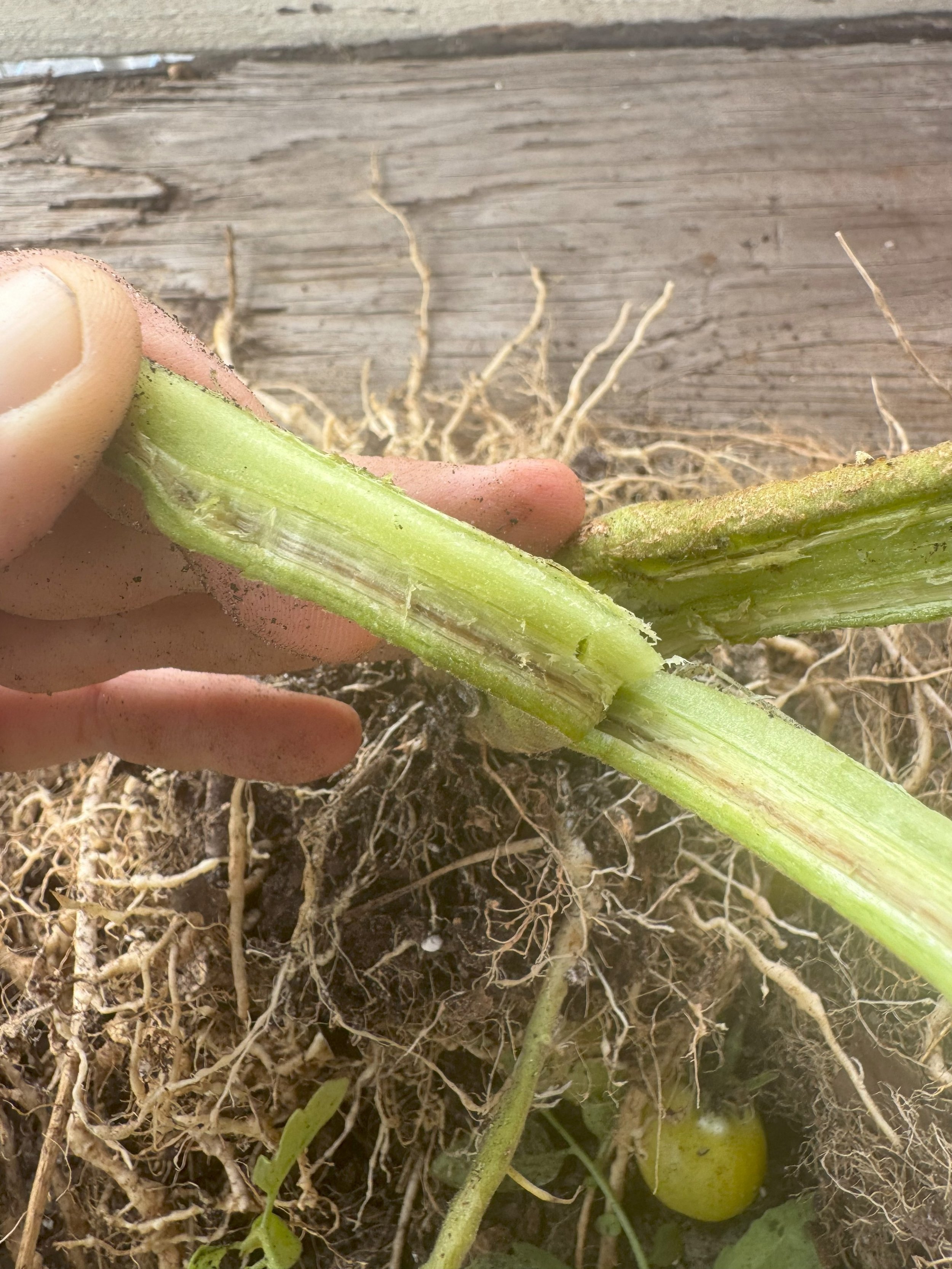
A cross section of a sick plant removed from the garden shows tell-tale signs of Fusarium wilt, with brown vascular tissue on one side of the stem. This clogs up the plant’s ability to move nutrients and water from the roots to the leaves and stems, eventually causing wilt and death. Diagnosis was confirmed by sending in a tissue sample to UF IFAS Plant Diagnostic Center.
There are several strategies for managing soilborne diseases including crop rotation, choosing resistant cultivars, and grafting. Depending on your growing space and goals, some, or all of these may be options. For us, crop rotation is possible, but our relatively small growing spaces and fondness for growing solanaceous crops make it challenging. Resistant cultivars are another option, but many of the varieties with documented and tested resistance are hybrids. These seeds can be expensive (often around 40–60 cents per seed), and because they are hybrids, we can't reliably save and replant the seeds while selecting for locally adapted traits. That makes them less appealing for the kind of work we do. Grafting, on the other hand, seemed like a strategy worth exploring. Plus we really like to geek out on learning new plant things, and this was right up our alley!
Trial Details
Scion variety: Conie Pink local beloved variety in our collection
Rootstock variety: Multifort (recommended rootstock)
Comparison: Grafted and non-grafted Conie Pink plants
Location: Field trial at UF’s Horticultural Sciences Teaching Farm
What we observed: Plant vigor, fruit production, and general fruit quality.
With help from the staff and students at UF's Horticultural Sciences Teaching Farm, we learned how to graft our Conie Pink (AKA the scion material) onto the variety called Multifort (AKA the rootstock material). It was quite a process! Making the careful cuts, joining the plants, allowing the grafts to heal for a couple of weeks, and then carefully transplanting them into the field all required time, attention, and patience. Timing is everything, and the specialized rootstock seeds aren't cheap, either.
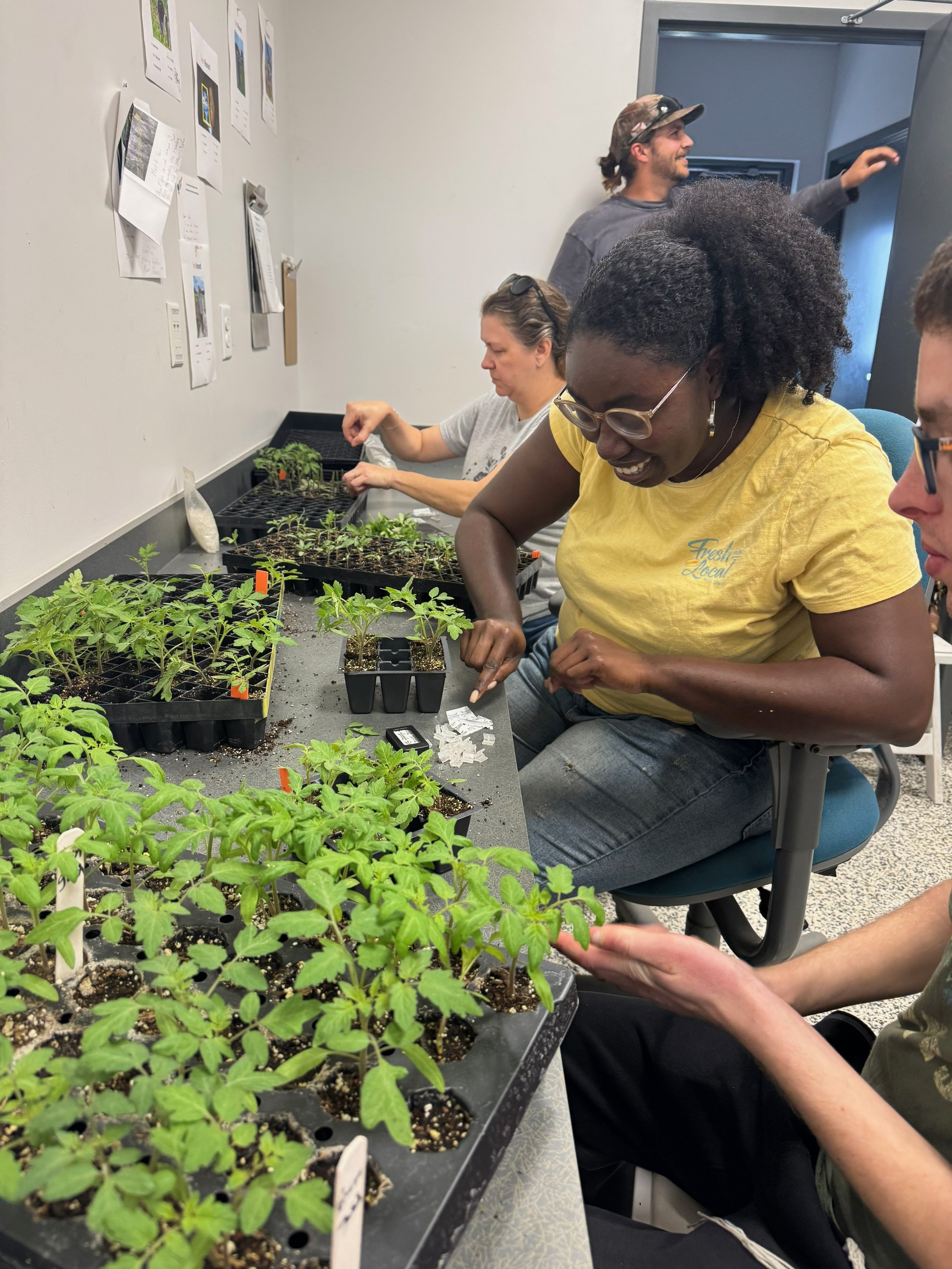
Learning how to graft Conie Pink scion onto Multifort Rootstock at UF’s Horticultural Sciences Teaching Farm.
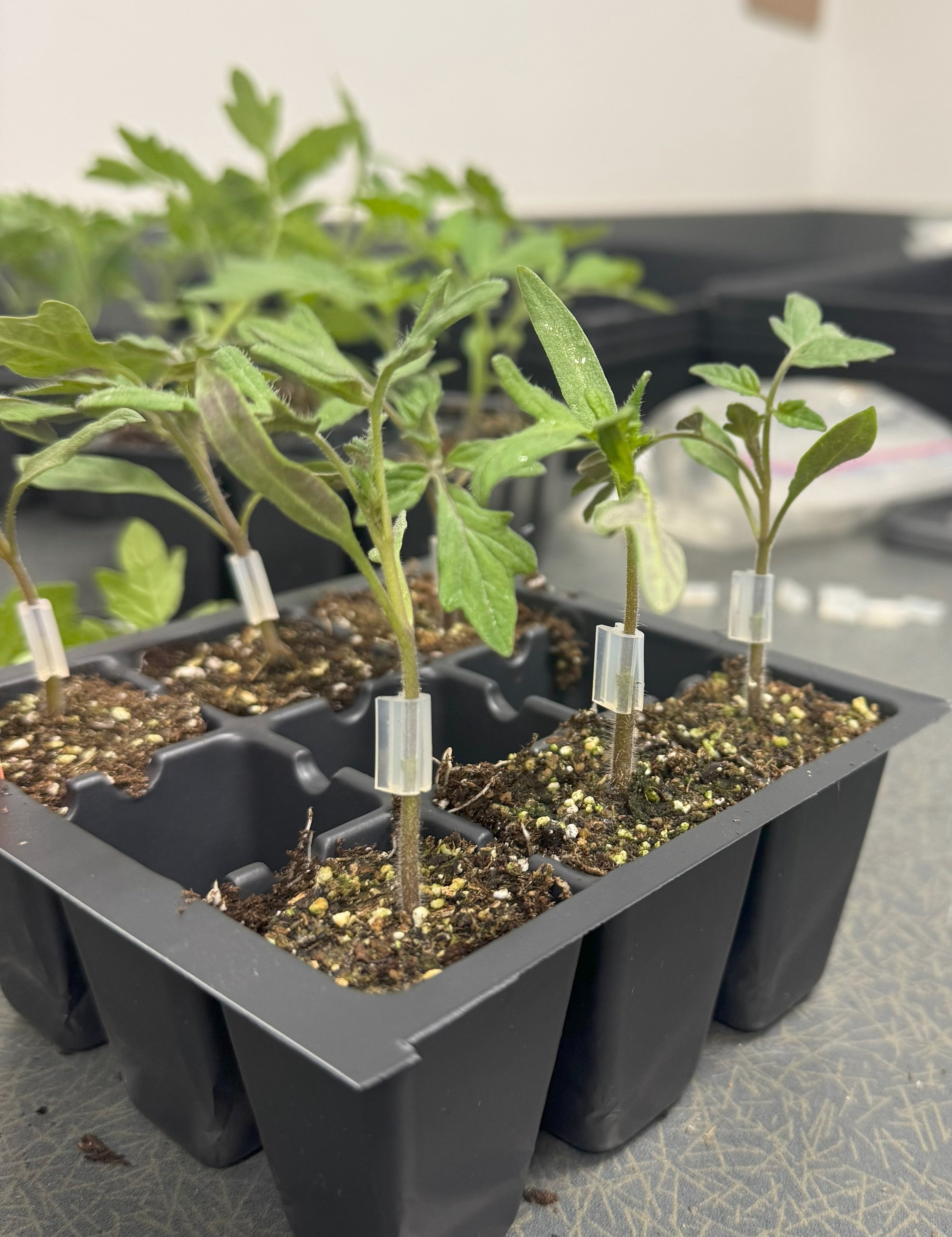
Both rootstock and scion are cleanly cut with a scalpel and held together with tiny clips. Eventually the tomatoes heal and join together. Not all of them took, and we lost about 20% of our grafts, but had planned for that by preparing more than we needed.
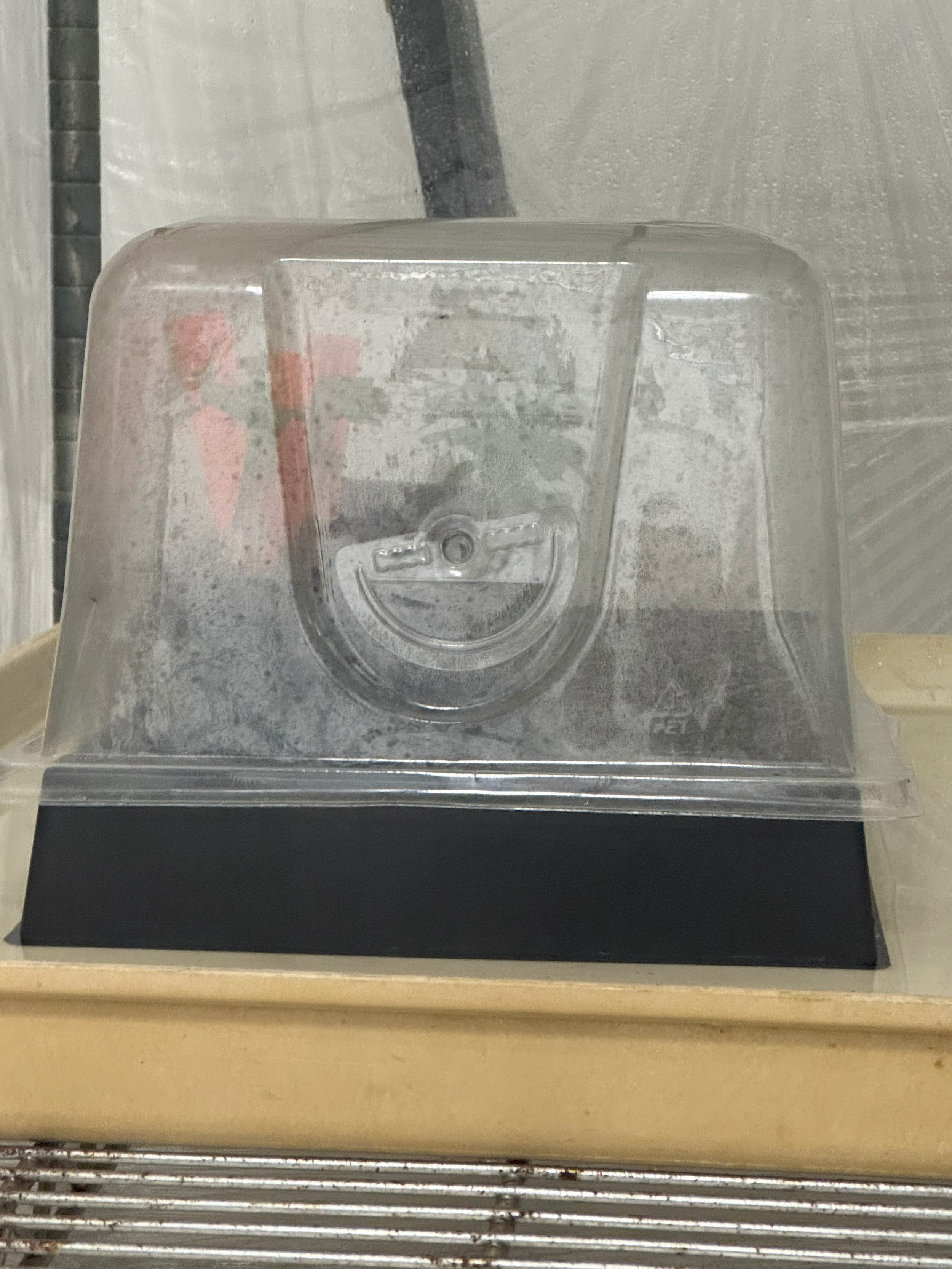
Plants healed inside a moist chamber under lights for a couple of weeks with bottom watering to keep them hydrated.
Fruit production
The average number of fruits per plant was:
Non-grafted tomatoes: 112 fruits per plant
Grafted tomatoes: 105 fruits per plant
Plant vigor and fruit quality
We observed overall plant growth and fruit quality throughout the season. Some of the grafted plants were noticeably beefier in stature, but that additional plant vigor didn't seem to translate into more fruit. We didn't observe dramatic differences in fruit quality that got us particularly excited, either. The first harvest of grafted plants was 2 weeks later than non-grafted plants, but that’s likely due to them being behind in their growth because of the slow healing time, while the non-grafted plants were growing happily in our greenhouse.

Our test row of tomatoes.
Overall Summary
So, after all that effort, was it worth it? Based on our results, we're not entirely convinced.
The yields were fairly similar, with the non-grafted plants actually producing slightly more fruit on average. We didn't conduct a statistical analysis to determine whether this difference was meaningful, but from a practical standpoint, we didn't see an obvious productivity advantage from grafting.
All the plants, grafted and not grafted, continued growing beyond the point when we decided to wrap up the trial. We were curious to see just how long they might keep producing, but fruit quality was declining so rapidly that we ultimately decided to call it quits. By that point, much of the harvested fruit was unattractive enough that it wouldn't have been marketable. Heat, humidity, insects, rain and age, all contribute to decline in fruit quality, and that was seen across all plants.
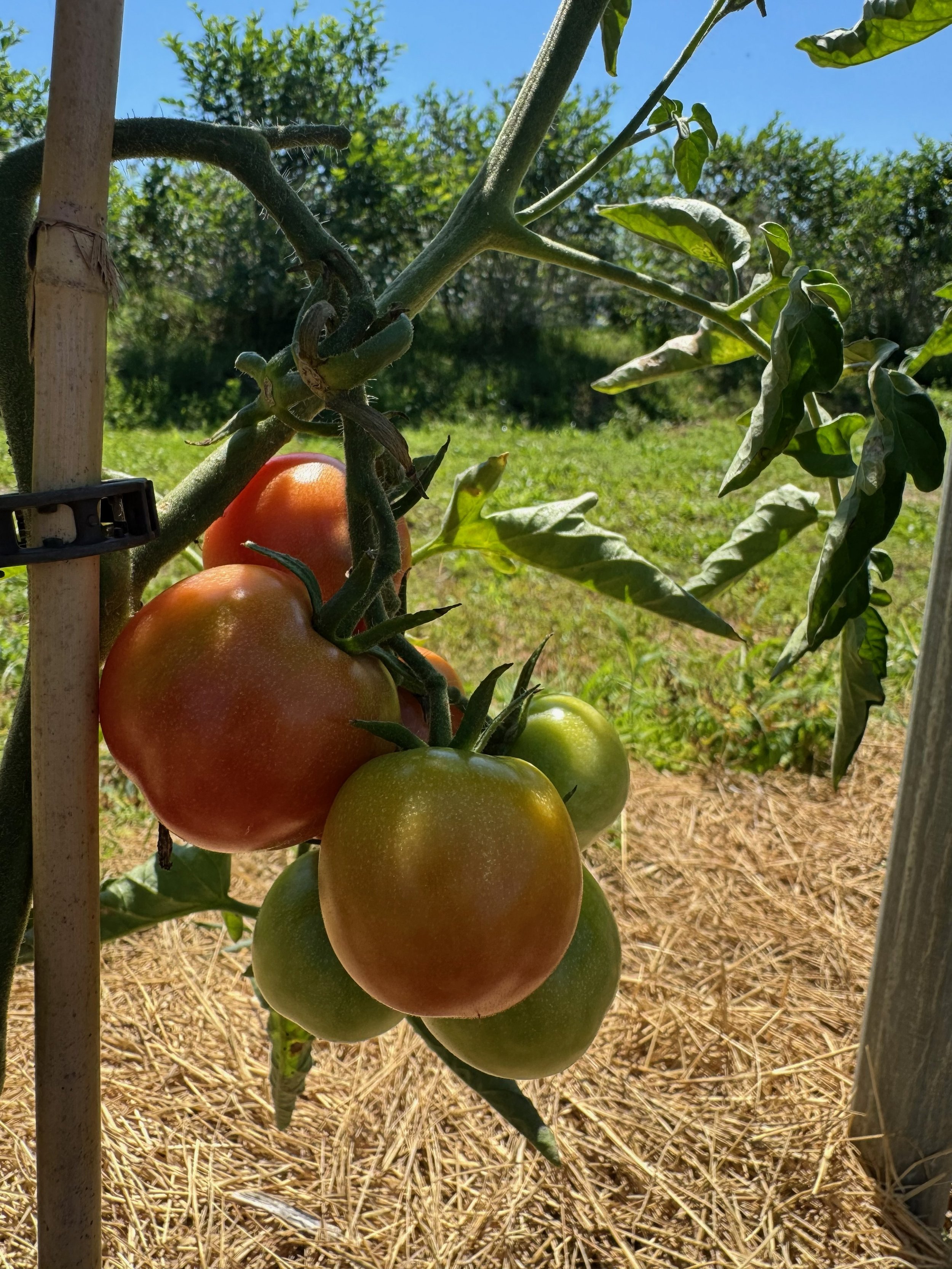
Healthy tomato plants and ripening Conie Pink fruits
Considering the added expense of rootstock seeds, the time and care involved in making and maintaining the grafts, and the fact that we ended up with more or less the same yield, we're not sure the investment makes sense for the type of work we're doing.
Of course, this doesn't mean grafting isn't valuable. For growers dealing with significant soilborne disease or nematode pressure, a resistant rootstock could make a meaningful difference. Our trial site, however, wasn't known to have a history of wilt problems, so we weren't able to evaluate grafting as a strategy for managing an existing disease issue. Instead, we could observe whether grafted plants would offer an advantage in vigor and productivity under otherwise good growing conditions. In our experience, they didn't.
This is just our one experience, and results can vary considerably depending on the growing conditions. In fact, research at Frog Song Organics Farm in Hawthorne, Florida, found that grafting was well worth the effort in their organic high-tunnel tomato production, where disease management was an important consideration. Read more about their research funded by Southern Sustainable Agriculture Research and Education.
As with most things in farming and gardening, each situation comes with its own unique challenges and goals. Costs and benefits of different disease prevention strategies will vary in each situation. It was a really fun practice to learn and observe, and we always love flexing our brains to learn new things about plants and emerging techniques! In future growing seasons, if soil borne wilts become more problematic, we now have a tool we could try our hand at again. But for now, we’ll grow tomatoes the old fashioned way.