
Written by Seed and Garden Director Melissa DeSa
Our fall and winter seed-saving and research gardens are a joyful mess of greens right now, and we’re excited to share what’s growing. Here’s a snapshot of what we’re working on this season—and what we’re learning along the way.
Lettuce Begin
We’re growing three special lettuces this season, all with seed saving in mind. Seeds were sown on Sept. 29 and transplanted on Oct. 24, spaced about 12” apart. Lettuce is self-pollinating, which means we can grow multiple varieties side by side without worrying about crossing. Often they flower at different times anyway—and even if they didn’t, we’d still end up with lettuce seeds that grow lettuce. That’s why we always save back some of the original seed just in case there were an oopsie-daisy!
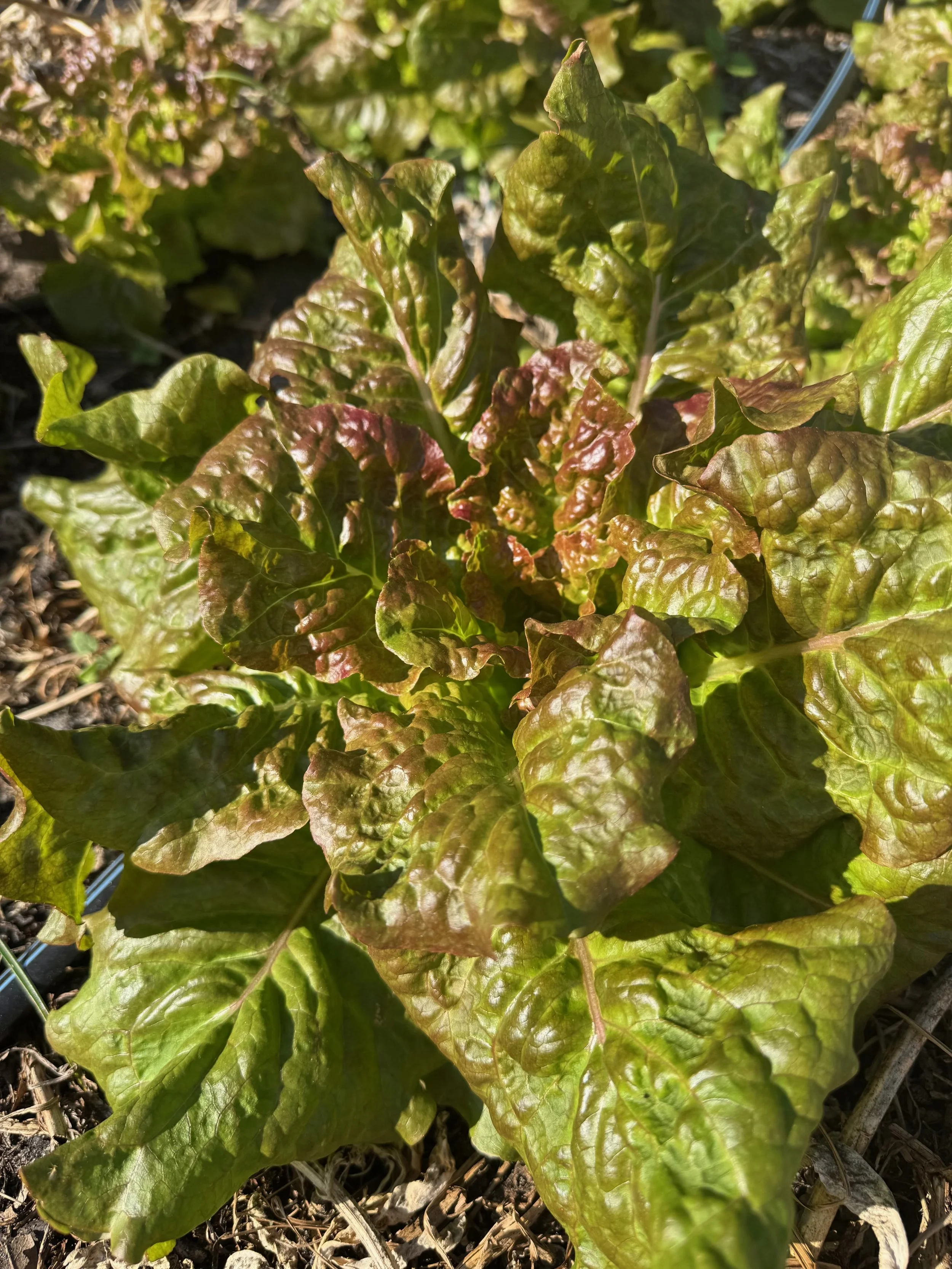
Grandpa Admire’s Lettuce
When we began our seed-saving journey, we looked to our garden heroes at Seed Savers Exchange (SSE) and chose this lettuce for both its beauty and its story. The granddaughter of Civil War veteran George Admire shared these seeds with SSE; they were grown in Missouri during his lifetime (1822–1911) and noted for heat tolerance and slow bolting.
This variety forms very large, loose heads. You can harvest the whole head, or pick individual leaves as a cut-and-come-again lettuce. We love the loose, frilled leaves with their magenta tinge.
Our seed stock has gotten low, so we’re replenishing it this year. Unfortunately, a warm winter caused earlier bolting than we’d hoped. We marked the slowest plants and will keep their seed separate—one small way we steadily adapt crops to our climate and the traits we value most.
We also want to acknowledge that variety names and histories are complex. Many people have stewarded this lettuce over time, not just Grandpa Admire, Seed Savers Exchange, or us. But we don’t always know the full story. Seeds travel so many places and only sometimes are the names and stories along the way widely known.
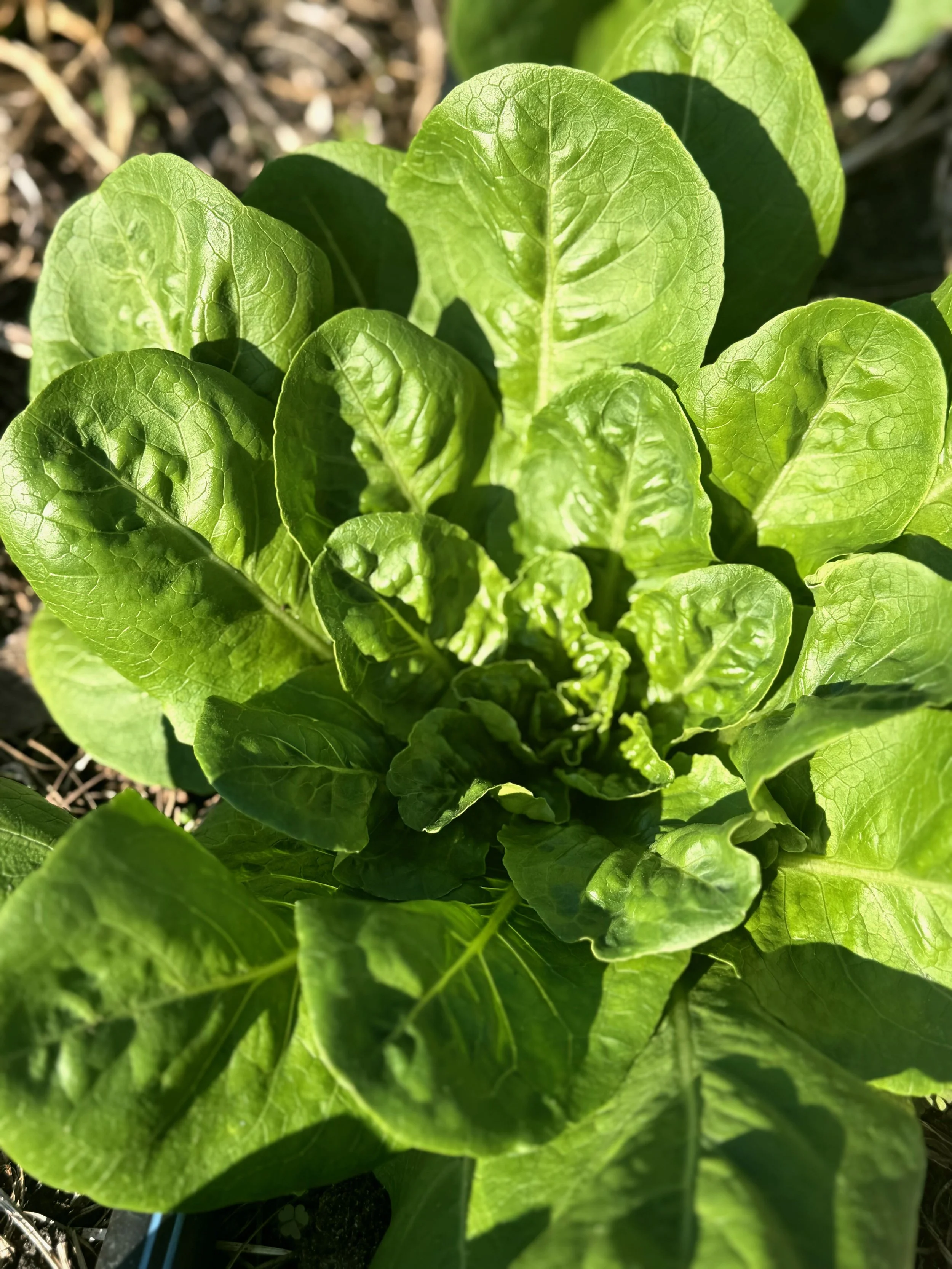
Spinach Lettuce
This newer variety from Row 7 was bred for improved nutrition—and you can tell. Its color and flavor are unlike any lettuce we’ve grown before. It resisted early bolting during our warm winter, remains disease-free, and has deep green leaves that almost resemble spinach. It’s already a standout. If it continues to thrive, we’ll save seed and share it in future seasons.
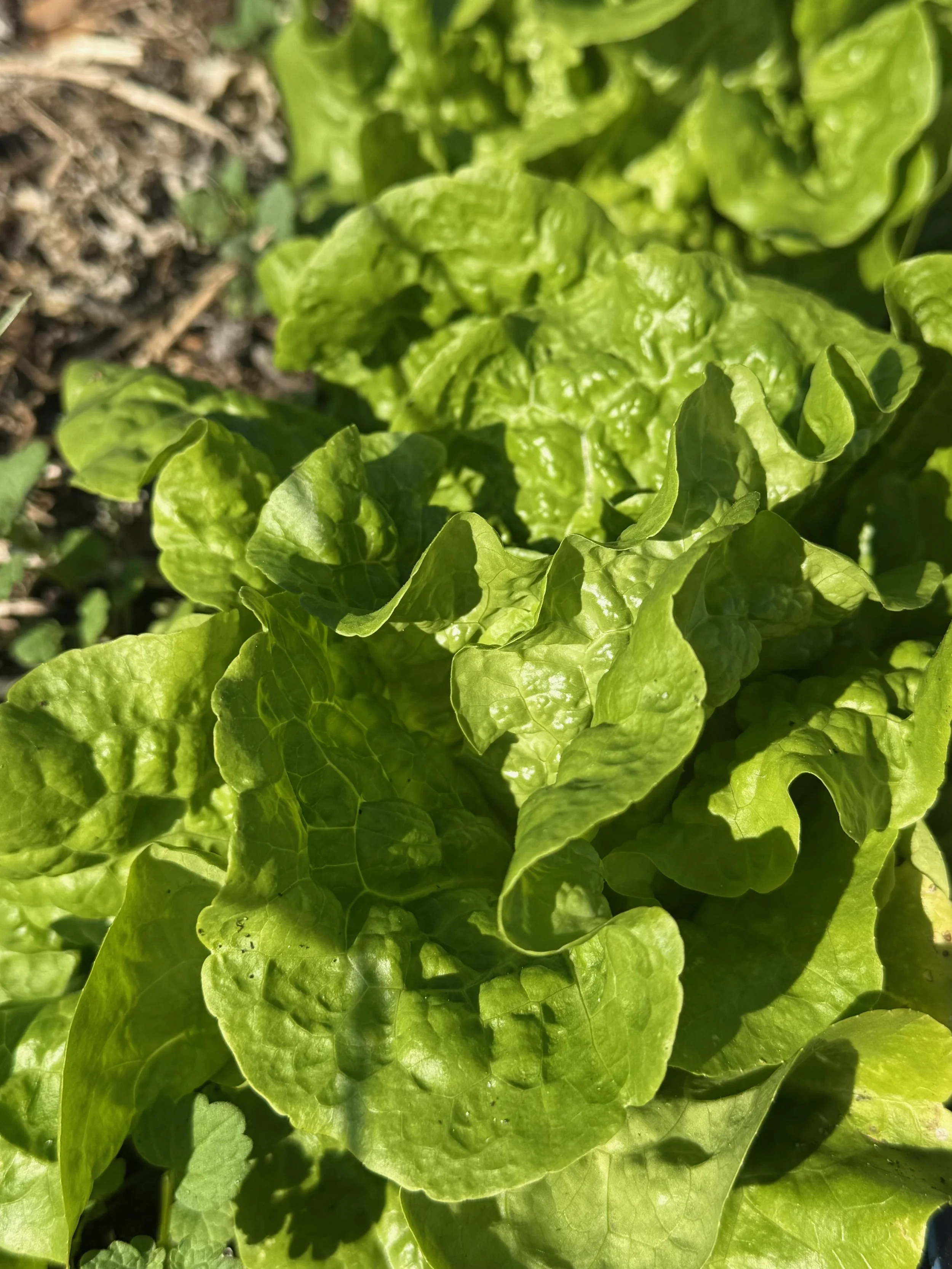
Manoa Lettuce
Manoa is a tropical lettuce developed by the University of Hawaii and widely grown for its heat tolerance and resistance to tip burn. These compact little heads can be grown close together (as tight as 6”), though we space them wider for seed production since they’ll be in the ground much longer.
We love this variety and are replenishing low seed stocks, but seed-saving comes with trade-offs. The tightly layered leaves tend to hold moisture, which can create challenges over the long season required for seed crops. We remove some layers to improve airflow and drying, but those same leaves may help support the plant as it grows tall and protect it during cold nights.
Growing for seed versus food is always a balance of choices and compromises.
Asian Greens: A Delicious Experiment
Last season, we planted all our favorite Asian greens together—a rare chance to see them side by side. When they flowered, we let the bees move freely among them, then collected seed from the whole mix. This year, we’re seeing the results.
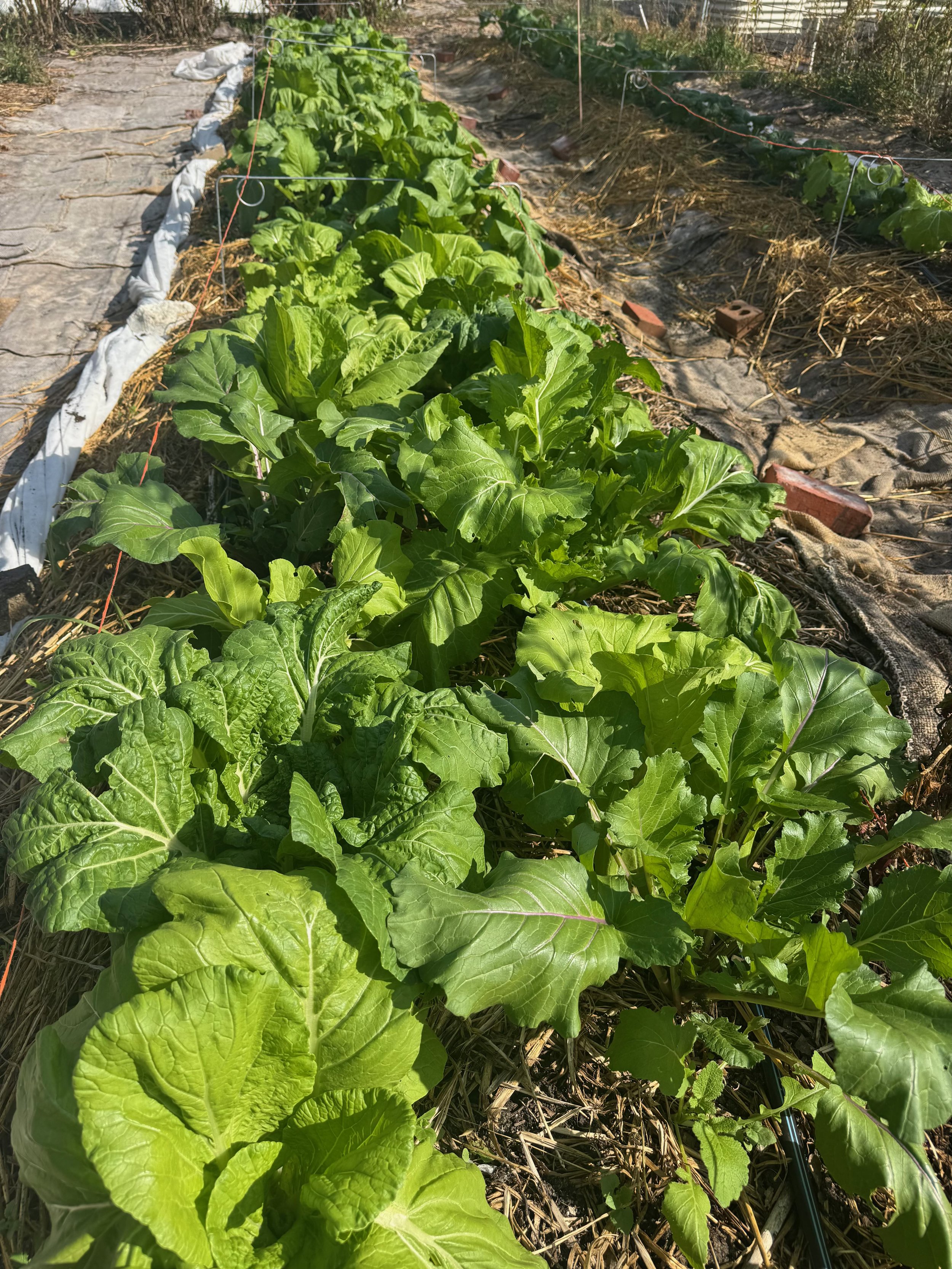
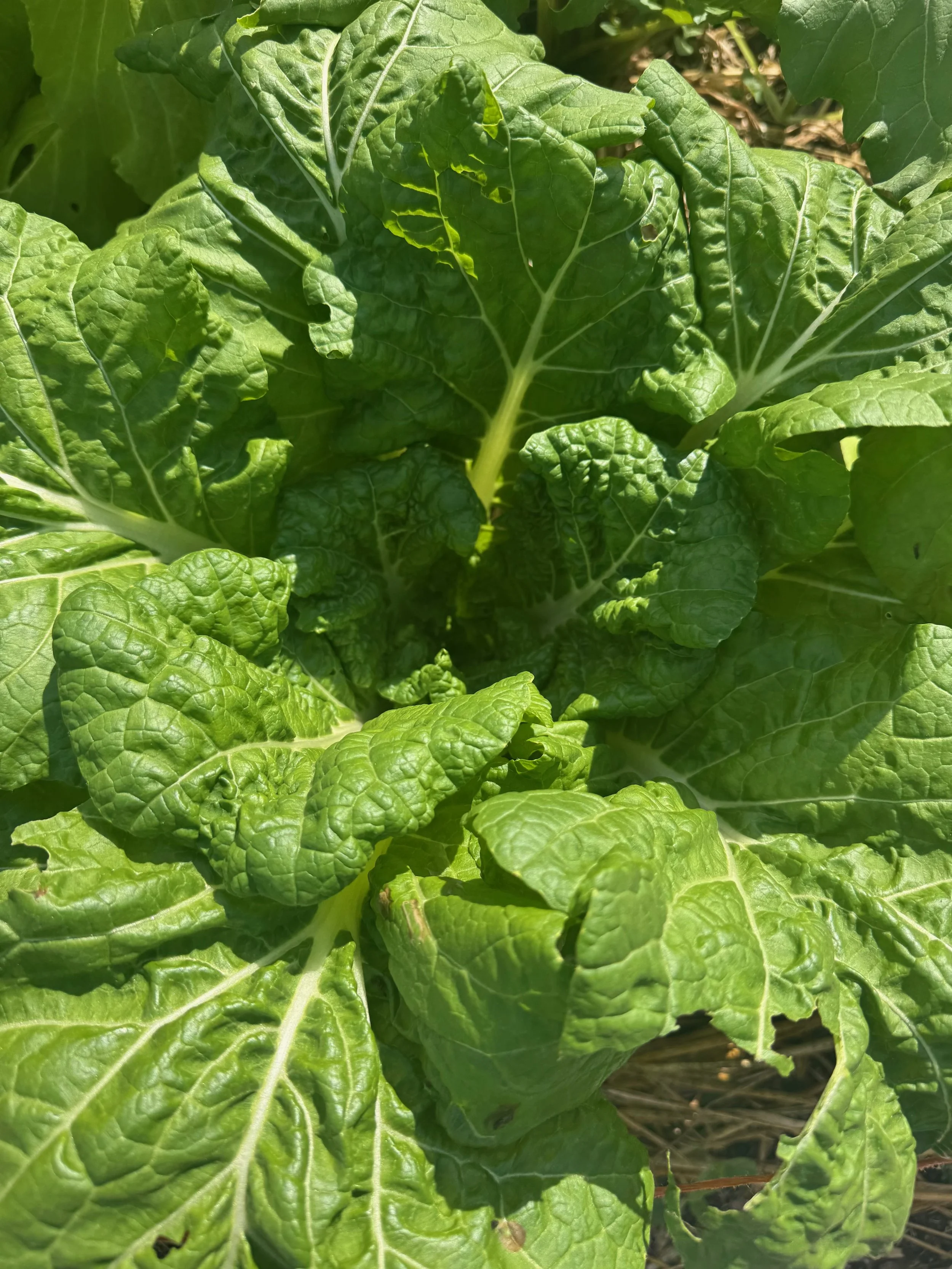
Some plants look familiar, suggesting little or no crossing. Others are entirely new and exciting. One standout looks like a cross between tatsoi-type greens (Chijimisai or Yukina Savoy) and something like Maruba Santoh or Tokyo Bekana—now resembling a larger, Swiss chard–like version of tatsoi. It was our favorite of the bunch.
We’ll be offering this mixed greens seed for gardeners who love diversity and surprise. It’s a fun way to grow many personalities in a small space, both in the garden and the kitchen. Someday, when we have more room, we’d love to grow these out further and begin selecting from our chard-looking newcomer.
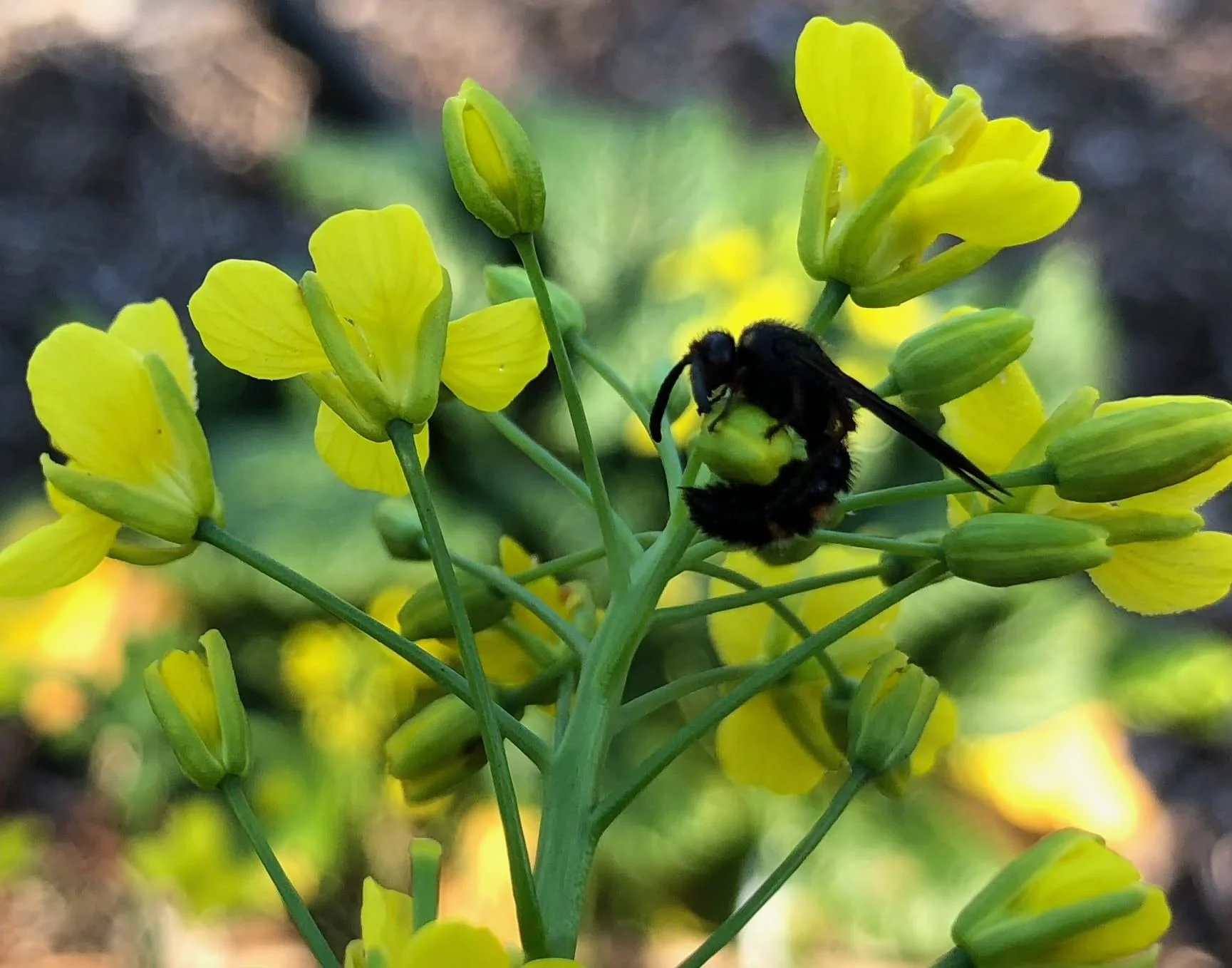
Bees Love Brassicas!
Brassicas—like Asian mustards, kale, collards, and broccoli—rely on bees to move pollen between plants, which makes them especially adaptable and fun to work with over time.
Radish Stories: Farmer John’s Daikon & the Ditch Daikon
For years, we’ve been stewarding a special daikon radish passed down from Farmer John in Starke. This season, we’re growing hundreds of plants to rebuild our seed supply. His original selection favored purple roots, and we’re continuing that tradition by removing pure white roots and giving extra space to those showing purple coloration.

Working Food crew harvesting radish seeds with Angie Minno in 2020.
In the spirit of genetic diversity, we also added a wild card: the Ditch Daikon.
A few years ago, Jordan Brown of The Family Garden told us about daikon that escaped cultivation and thrived in roadside ditches. We collected seed, and this year finally had space to grow it out.
Here’s what we’re seeing:
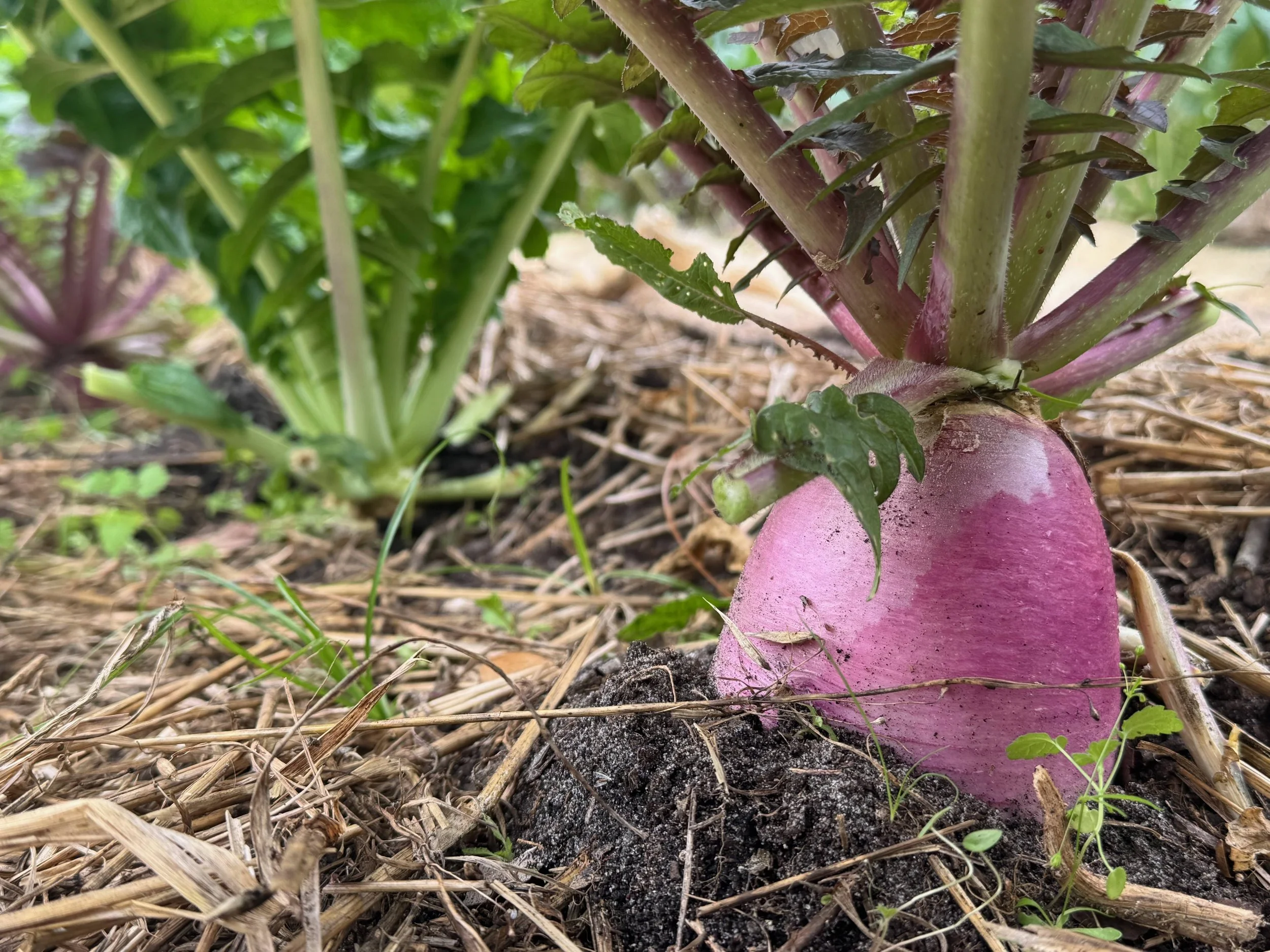
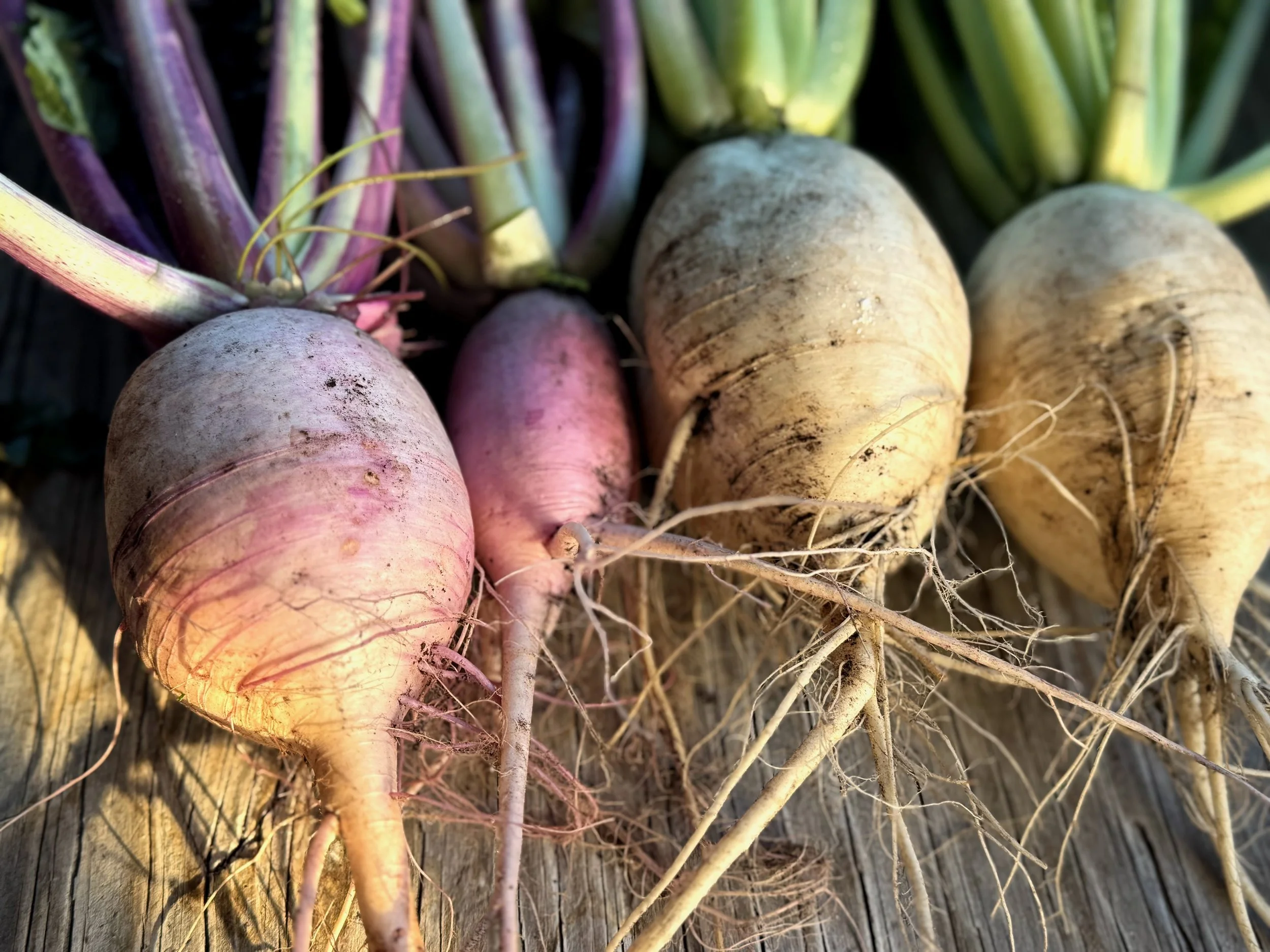
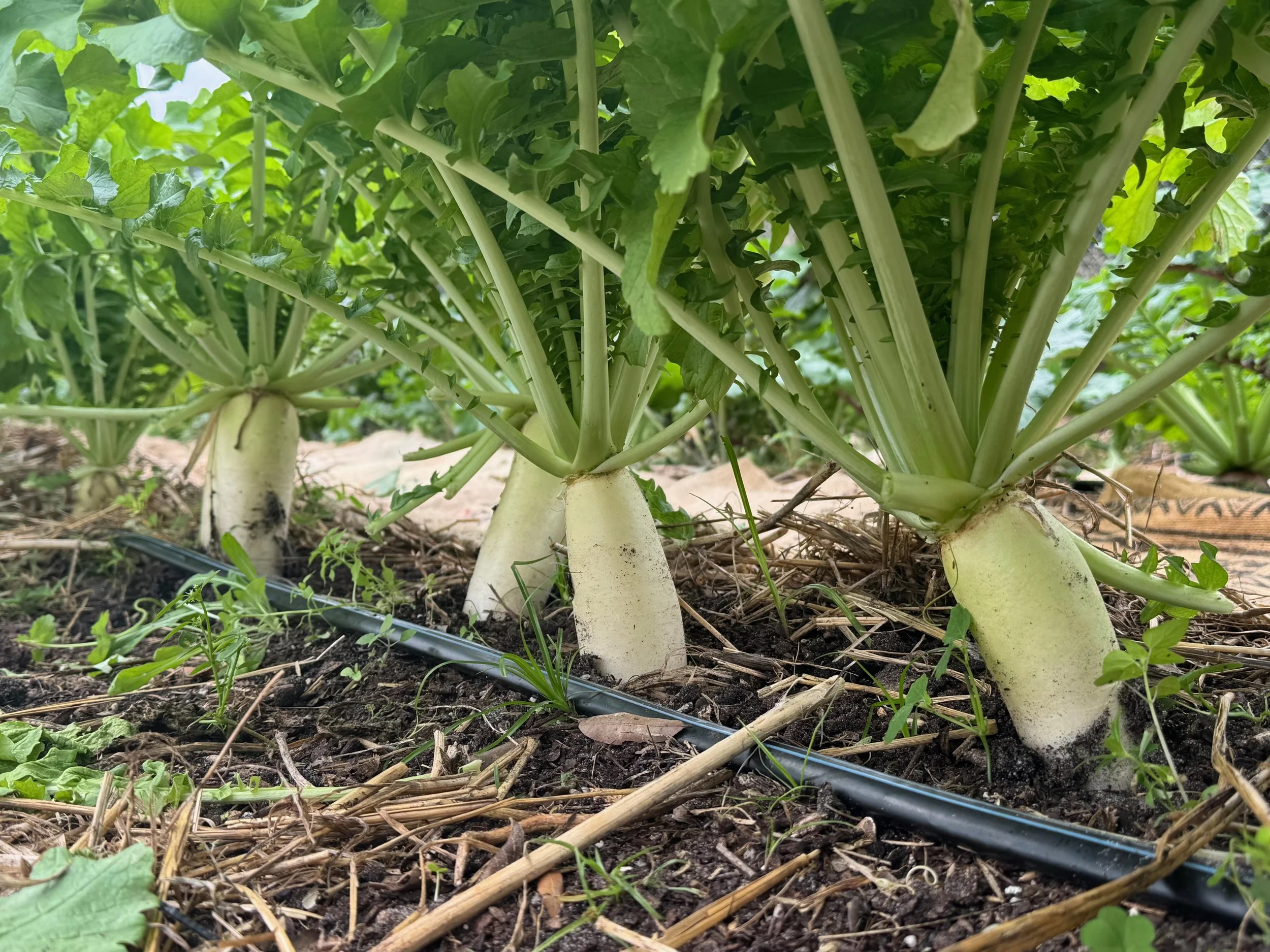
Farmer John’s Daikon: Slower growing, larger, with purple leaves and roots; rounder roots set deeper in the soil.
Ditch Daikon: Faster growing, all white, tall and skinny, bursting out of the ground like the Hulk.
They’re growing side by side, and we’ll see what spring brings. They may not cross at all—and that’s okay. Sometimes we let nature decide and simply pay attention.
This year also deepened our appreciation for radishes as soil builders. Tillage radishes don’t just break up compacted soil—they also add tremendous biomass to sandy soils. When left to rot in place, their massive roots create space for air and microbes and help build organic matter.
As seed savers, we don’t get to eat most of our radishes—they must stay in the ground to complete their life cycle. But when they finally break down, they feed the soil. By May, we’ll tuck this garden in with a cover crop and let it rest, enriched by the radish residue.
Broccoli Criss-Crosses
After attending the Organic Seed Growers Conference in Oregon, I brought back some exciting broccoli to trial:
A purple broccoli developed by the Organic Seed Alliance.
A broccoli “grex” from Clint Freund of Cultivating the Commons, created by letting many varieties—including our beloved Piracicaba—cross freely.
Broccoli Ultracross
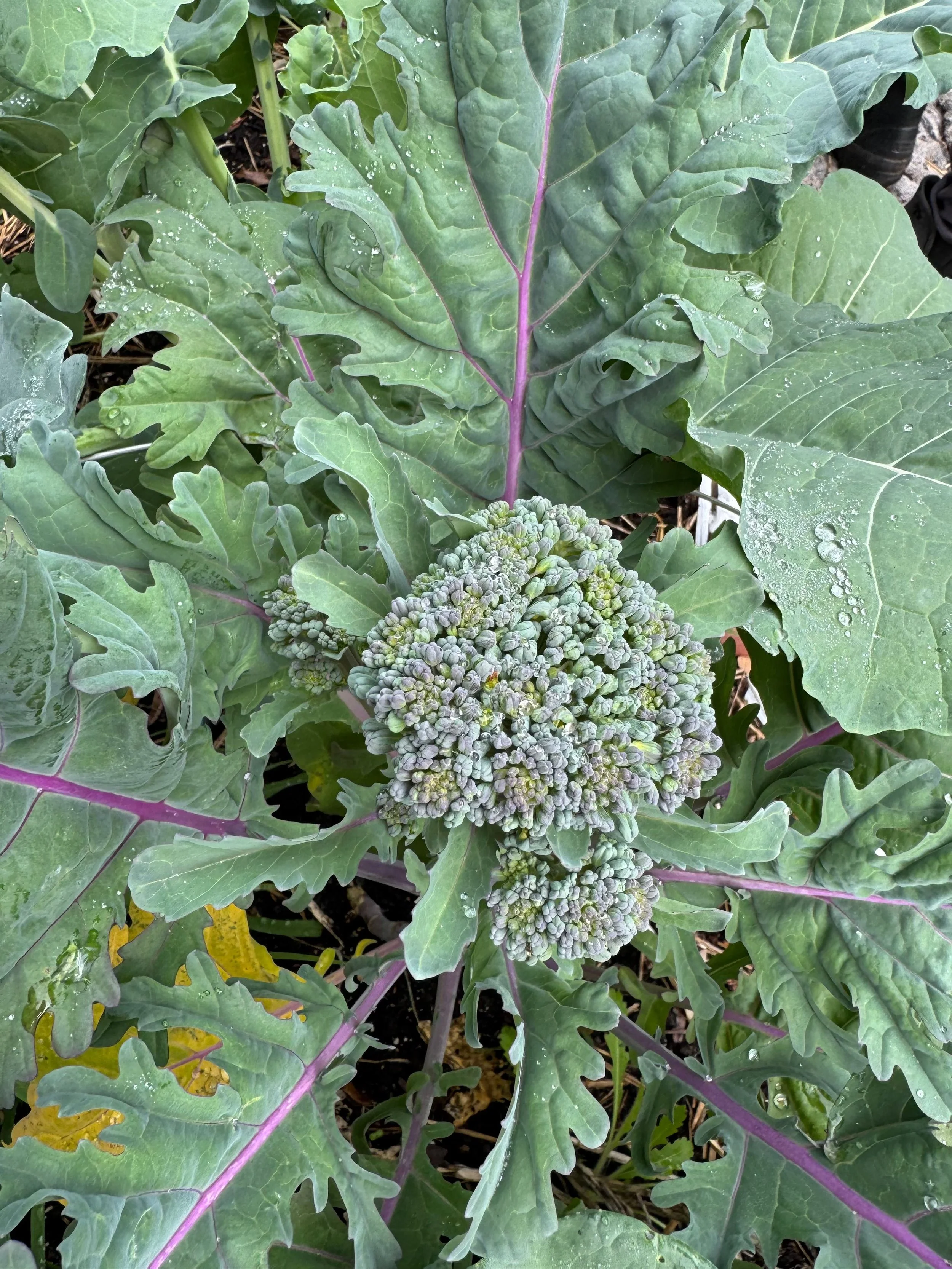
Even in a less-than-ideal garden spot, the plants are beautiful. One has especially caught our eye—it looks like a cross between Red Russian kale and broccoli. Clint is interested too, and we’ll try to send seed or cuttings if possible.
Long-term, we’d love to grow these out in greater numbers, select early for traits we love, and keep refining. That said, our hearts still belong to Piracicaba—it grows well here, tastes incredible, and has become a staple for many local growers.
Mustard Allies & Root Lessons
Root-knot nematodes are a fact of life in Florida gardens. Some crops—tomatoes, peppers, okra, beans—are especially vulnerable. Since we can’t eliminate them, we focus on reducing their impact: rotating crops, adding compost, encouraging beneficial organisms, and removing heavily infected plants.
And sometimes, plants surprise us.
At the end of fall, we pulled our Grandma Ernestine’s Butterbeans, grown for seed. Above ground, they thrived all season. Below ground, the roots were shocking—long, wildly branched, and full of nematode knots.
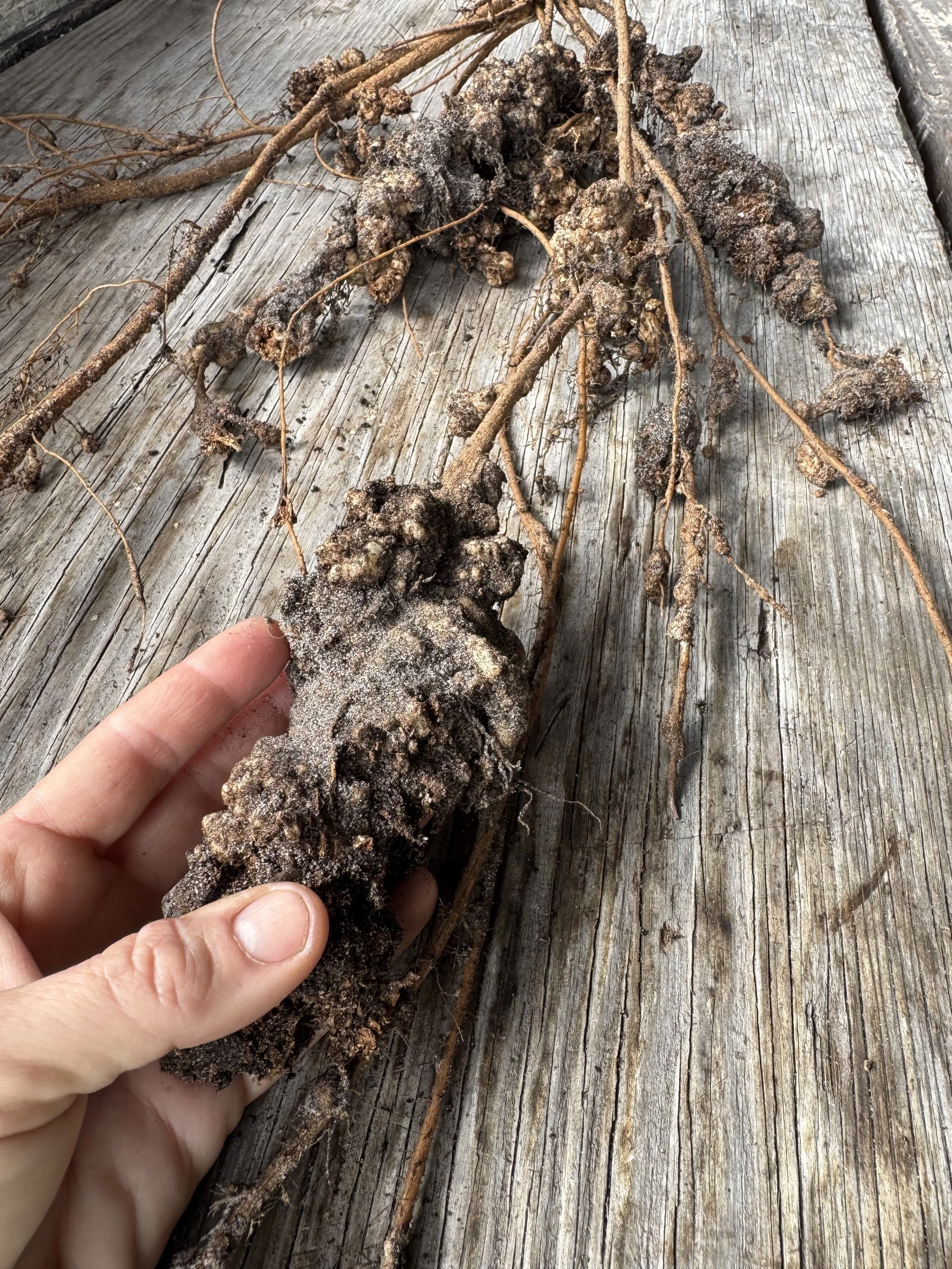
Nematode knots on butterbean roots
Their strategy seemed simple: grow all the roots. We’ve hung them in our potting shed like a trophy, honoring plant resilience.
Faced with that soil, we made a choice. Instead of planting another seed crop, we sowed a mixed cover crop of mustards, buckwheat, and winter peas. Mustards can help suppress nematodes, while living roots keep soil biology active. Soon, we’ll turn it all in, add fresh homemade compost, and prepare for spring. Fingers crossed.